
 Cody Cooper
The UK government has granted development consent for the Beacon Fen Energy Park, a major solar and battery storage project planned for Lincolnshire, as Britain continues expanding domestic renewable energy infrastructure.
The Department for Energy Security and Net Zero approved the project’s Development Consent Order on August 21, 2026, following an examination by the Planning Inspectorate. Beacon Fen is being developed by London-based renewable energy company Low Carbon and is planned to include 400 MW of solar photovoltaic capacity alongside a battery energy storage system of up to 600 MVA.
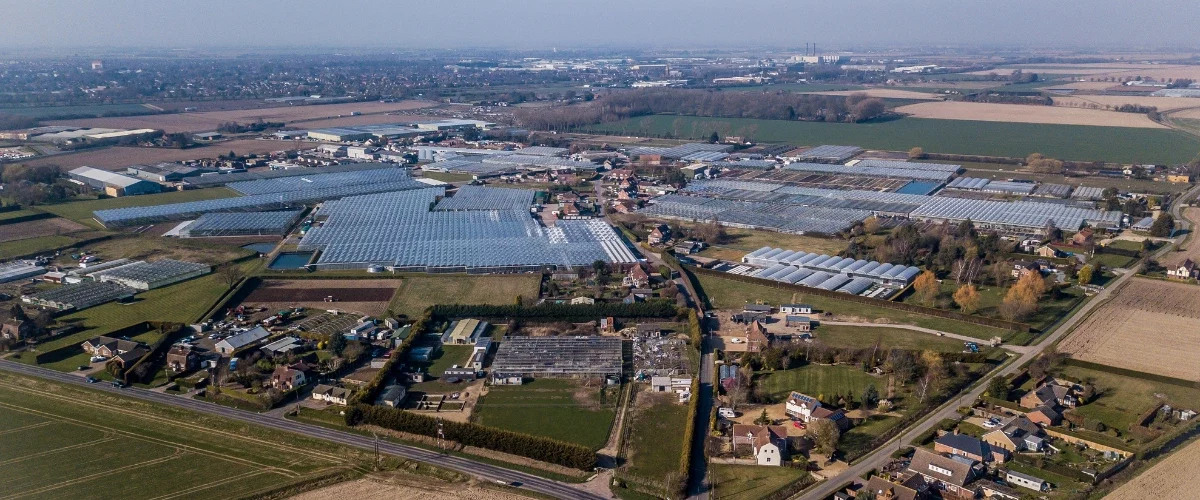
The project will be constructed on land east of Sleaford and north of Heckington in Lincolnshire. In addition to solar panels and battery storage, the development will include an on-site substation, electrical infrastructure, security fencing, ecological enhancements and a grid connection of up to 400 kV.
Low Carbon estimates that Beacon Fen could generate enough electricity annually to meet the equivalent needs of approximately 130,000 UK homes and avoid around 72,000 metric tons of carbon dioxide emissions each year. Those figures are developer estimates rather than independently verified government projections.
Project clears national planning process
Beacon Fen’s scale meant that it required approval through the UK’s nationally significant infrastructure planning process.
The project’s application was submitted to the Planning Inspectorate on April 8, 2025, and accepted for examination the following month. After a six-month examination that allowed local residents, authorities, statutory consultees and other interested parties to submit evidence, the Examining Authority delivered its recommendations to the government on May 22, 2026. Development consent followed in August.
The Planning Inspectorate said the project was the 112th energy application it had examined and that the review was completed within the statutory timetable established by the Planning Act 2008.
Battery storage is expected to play an important role in the development. Rather than requiring all solar electricity to be consumed or exported when it is generated, storage can retain surplus power and make it available later, helping the electricity system accommodate larger amounts of variable renewable generation.
Approval comes amid wider UK energy debate
The Beacon Fen decision comes as the UK continues to debate the future balance between renewable energy development and domestic oil and gas production.
Recent political discussion has focused heavily on the future of North Sea oil and gas projects, including Rosebank and Jackdaw, while the government simultaneously faces pressure to expand domestic low-carbon electricity generation and strengthen energy security.
The UK’s renewable energy policy identifies additional electricity generation as an urgent national requirement. The government’s 2025 National Policy Statement for renewable energy infrastructure states that electricity demand could more than double by 2050 and that this could require a fourfold increase in low-carbon electricity generation, with most of the additional supply expected to come from renewable sources.
Solar is already playing a growing role in that expansion. Low Carbon said in March that it had brought approximately 240 MW of large-scale solar capacity into operation in the UK over the previous 12 months through seven projects in Warwickshire, Essex and Shropshire. The company estimated that those projects could collectively generate electricity equivalent to the annual needs of more than 64,000 UK homes.
Beacon Fen would represent a substantial addition to that portfolio if it proceeds through construction and becomes operational.
The project also reflects a broader shift toward pairing large solar developments with battery storage. As Britain adds more intermittent renewable generation, storage can provide greater flexibility by absorbing electricity during periods of high production and supplying it when demand is stronger.
The government’s approval does not mean construction will begin immediately. Low Carbon must now progress through the next stages of project development and comply with the requirements attached to the Development Consent Order before construction can proceed.
Nevertheless, the approval represents another significant step in Britain’s expansion of utility-scale solar and storage infrastructure at a time when energy security, electricity costs and the future of North Sea fossil fuel production remain central issues in the country’s energy policy debate.
Sources
- UK Planning Inspectorate, Beacon Fen Energy Park development consent decision
- UK Department for Energy Security and Net Zero, Beacon Fen Energy Park decision
- UK National Policy Statement for Renewable Energy Infrastructure
- Low Carbon, UK solar capacity update

 Daniyal Ahmed
 Marley Kakusa



Add comment