

 Daniyal Ahmed
The ongoing U.S.-Israeli war with Iran is giving new momentum to renewable energy investment across Europe and Asia, as governments seek to reduce their exposure to volatile oil and natural gas markets and strengthen domestic energy security.
According to a Reuters report published August 26, the conflict and effective closure of the Strait of Hormuz have disrupted roughly one-fifth of global oil and liquefied natural gas shipments. The resulting price pressures have prompted governments in Europe and Asia to reconsider their dependence on imported fossil fuels and accelerate investment in solar, wind, storage, and electrification.
The International Energy Agency (IEA) has also documented the scale of the disruption. It said the temporary loss of nearly 20% of global LNG supply pushed natural gas prices in Europe and Asia to their highest levels since the 2022-2023 energy crisis. While alternative LNG supplies have helped ease some pressure, the crisis has reinforced the role of renewable generation in diversifying electricity supplies.
Renewable generation continues to accelerate
The shift comes during an already significant expansion of renewable energy. The IEA expects global renewable electricity generation to increase by more than 8% in 2026 and overtake coal-fired generation for the first time.
Solar PV is expected to make the largest contribution to electricity supply growth, with generation forecast to increase by approximately 600 terawatt-hours in 2026. Solar is also projected to surpass wind this year to become the world’s second-largest source of renewable electricity after hydropower.
The expansion builds on record deployment in 2025, when approximately 800 GW of renewable capacity was added globally. Solar accounted for roughly three-quarters of those additions. China alone installed nearly 370 GW of solar PV capacity during the year, while the European Union added almost 70 GW.
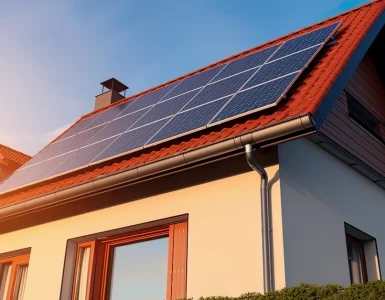
Reuters reported that rooftop solar has become particularly attractive since the Middle East conflict began because systems can generally be deployed more quickly than large power plants. High electricity prices have encouraged households and businesses in countries such as the Philippines to install solar, while battery incentives have supported rooftop installations in Australia. European demand for rooftop systems has also increased.
Europe looks to homegrown energy
Europe’s response has focused heavily on reducing its vulnerability to imported fossil fuels. The European Commission introduced its AccelerateEU measures in April following the escalation of the Middle East conflict, calling for faster renewable deployment, greater electrification, expanded grids, and additional investment in clean energy.
The Commission estimates that the EU imported approximately €340 billion worth of fossil fuels in 2025. By the end of July 2026, the bloc had spent an additional €62 billion on fossil fuels as a result of higher prices since the conflict intensified.
Recent events have also demonstrated the value of Europe’s growing solar fleet. During heat waves and drought conditions in August, the European Commission said high solar generation helped ease pressure on electricity prices during daytime hours. However, officials emphasized that additional battery storage will be necessary to move surplus daytime solar electricity into evening periods when demand remains high.
Asia faces a more complicated transition
The energy shock has been particularly significant for Asian economies dependent on imported oil and LNG.
Reuters reported that China responded with further growth in solar generation, with solar output increasing more than three times as quickly as coal generation between March and July. Other countries, however, have relied more heavily on coal to compensate for disruptions in oil and gas markets. India, Vietnam, and South Korea all increased coal generation, highlighting the competing pressures between energy security and decarbonization.
The IEA has similarly found that high gas prices have encouraged fuel switching toward coal in parts of both Asia and Europe. Globally, coal-fired generation is expected to rise by about 1.4% in 2026, although that increase remains substantially smaller than the projected growth in renewable electricity.
Energy security becomes a major renewable energy driver
The latest developments suggest that renewable energy is increasingly being viewed not only as a climate strategy but also as an energy security measure.
Solar and wind do not require continuous imports of fuel once projects are operating, making them less directly exposed to disruptions in international oil and gas markets. The current crisis has therefore strengthened the economic and strategic case for countries that rely heavily on imported fuels to expand domestic renewable generation.
However, the transition is unlikely to be straightforward. Higher interest rates can increase financing costs for renewable projects, while grids and energy storage systems require substantial investment to accommodate larger volumes of variable solar and wind generation. In addition, countries facing immediate energy shortages may continue using coal and other fossil fuels as short-term substitutes for disrupted gas supplies.
The IEA expects renewable electricity’s share of global generation to increase from about 33% in 2025 to 37% by 2027. Continued investment in transmission networks, battery storage, demand flexibility, and other grid infrastructure will be necessary to support that expansion.
The U.S.-Iran conflict has therefore produced two competing energy trends. In the short term, disrupted gas supplies have increased coal use in some markets. Over the longer term, however, the volatility of imported fossil fuel prices is strengthening the case for solar, wind, storage, and electrification as governments seek more secure domestic sources of energy.
Sources
- Reuters, “US-Iran war spurs Europe, Asia to boost renewables”
- International Energy Agency, Electricity Mid-Year Update 2026
- International Energy Agency, Global Energy Review 2026
- IEA, 2026 Energy Crisis Policy Response Tracker
- European Commission, AccelerateEU energy resilience measures
- European Commission, August 2026 electricity system update


 Marley Kakusa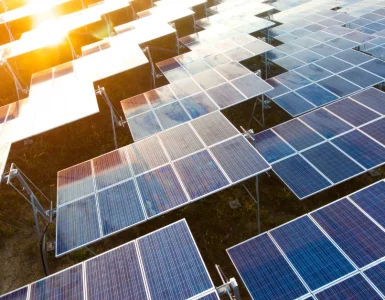
 Cody Cooper



Add comment