
 Daniyal Ahmed
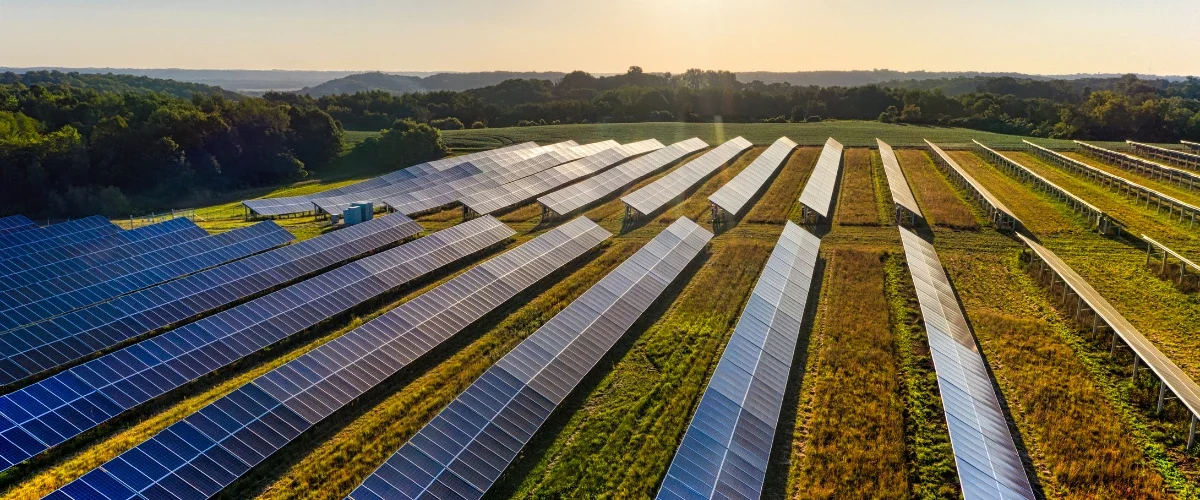
Solar energy occupies only a small fraction of U.S. farmland, according to a new analysis released by the Solar Energy Industries Association (SEIA), as debate continues over the role of utility-scale solar development in agricultural communities.
Solar Occupies a Small Share of U.S. Land
The analysis, published alongside a new interactive mapping tool, found that solar projects currently occupy just 0.07% of U.S. farmland and 0.04% of the nation’s total land area.
The findings aim to provide data-driven context as policymakers consider land-use issues during ongoing Farm Bill discussions.
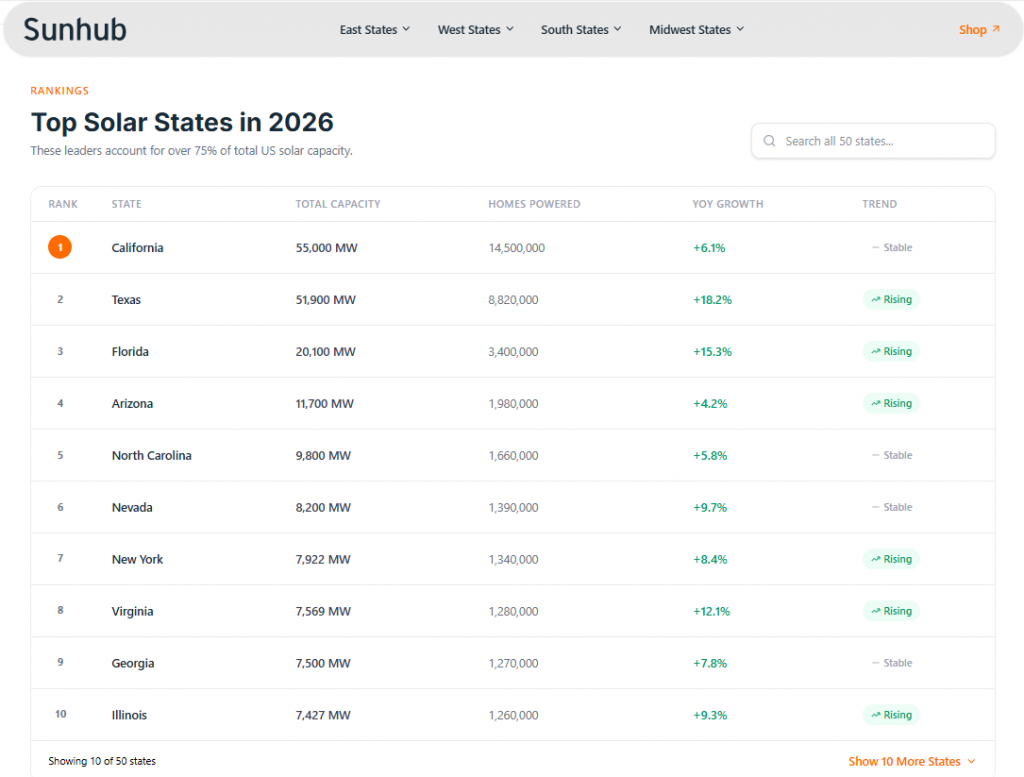
Explore U.S. Solar State Rankings
Compare solar rankings, installed capacity, growth trends, and market performance across all 50 states. Discover regional insights to support smarter procurement and expansion decisions.
No State Uses More Than 0.5% of Prime Farmland for Solar
SEIA’s mapping tool also found that no U.S. state has more than 0.5% of its prime farmland occupied by solar installations.
According to the organization, nearly every state has more abandoned prime farmland than land currently used for solar projects. Nationally, there are approximately 43 acres of abandoned prime farmland for every acre of prime farmland hosting solar development.
Solar Compared With Other Land Uses
The report compares solar development with other land uses that permanently convert agricultural land.
According to the analysis, golf courses occupy about 2.6 times more prime farmland than solar projects, while suburban development since 2014 has converted roughly six times more prime farmland than utility-scale solar.
Solar and Agriculture Can Coexist
SEIA President and CEO Tim Pawlenty said the analysis demonstrates that energy production and agriculture can coexist when projects are thoughtfully developed.
“America depends on our land to grow our food, build our communities, and power our lives,” Pawlenty said in a statement. “Responsible land use means balancing all of those needs. This map helps provide important context by showing that solar and agriculture can thrive together. Solar development uses a very small amount of farmland compared to many other common land uses, while also delivering affordable energy, local tax revenue, and reliable income for farmers and landowners.”
Agrivoltaics Supports Dual Land Use
The report also highlights the growing use of agrivoltaics, where farmland continues to support agricultural activities such as livestock grazing, crop production, or pollinator habitats alongside solar generation.
According to SEIA, these dual-use projects provide farmers with an additional source of stable income while allowing agricultural operations to continue.
Rural Land-Use Concerns Continue
The findings come as utility-scale solar projects face increasing scrutiny over land use in some rural communities.
Renewable energy advocates argue that solar’s land footprint remains relatively small compared with other forms of development. They also note that, unlike suburban expansion, solar facilities can generally be decommissioned and the land restored after a project’s operating life.
Mapping Tool Aims to Support Informed Decisions
Industry groups say the new mapping tool is intended to help policymakers, landowners, and local officials make informed decisions using publicly available land-use data rather than perceptions about the scale of solar development.
The analysis draws on datasets from the U.S. Department of Agriculture, the U.S. Geological Survey, and other federal land-use databases.


 Marley Kakusa
 Cody Cooper



Add comment