

 Cody Cooper
China solar exports – China’s exports of solar products reached an unprecedented level in March 2026, driven by strong demand from Africa and Asia, according to customs data analyzed by energy think tank Ember and reported across multiple industry sources. The surge reflects both short-term policy and pricing dynamics as well as broader structural growth in global renewable energy adoption.
According to Ember’s analysis of Chinese customs figures, China exported around 68 gigawatts of solar capacity in March, including photovoltaic modules, cells, and wafers. This marked the highest monthly total on record and represented a sharp increase from February levels. The export volume was also significantly higher than the previous record set in August 2025. The data has been widely cited in clean energy reporting, including Reuters and PV Tech, which confirmed the scale of the March spike.
A major driver of the increase was a surge in demand from developing regions, particularly Africa and Southeast Asia. Countries in these regions have been rapidly expanding solar deployment as they seek to reduce reliance on imported fossil fuels and address persistent electricity shortages. According to Ember’s regional breakdown, exports to Asia and Africa accounted for the majority of the monthly increase, with some countries setting record levels of solar imports in a single month.
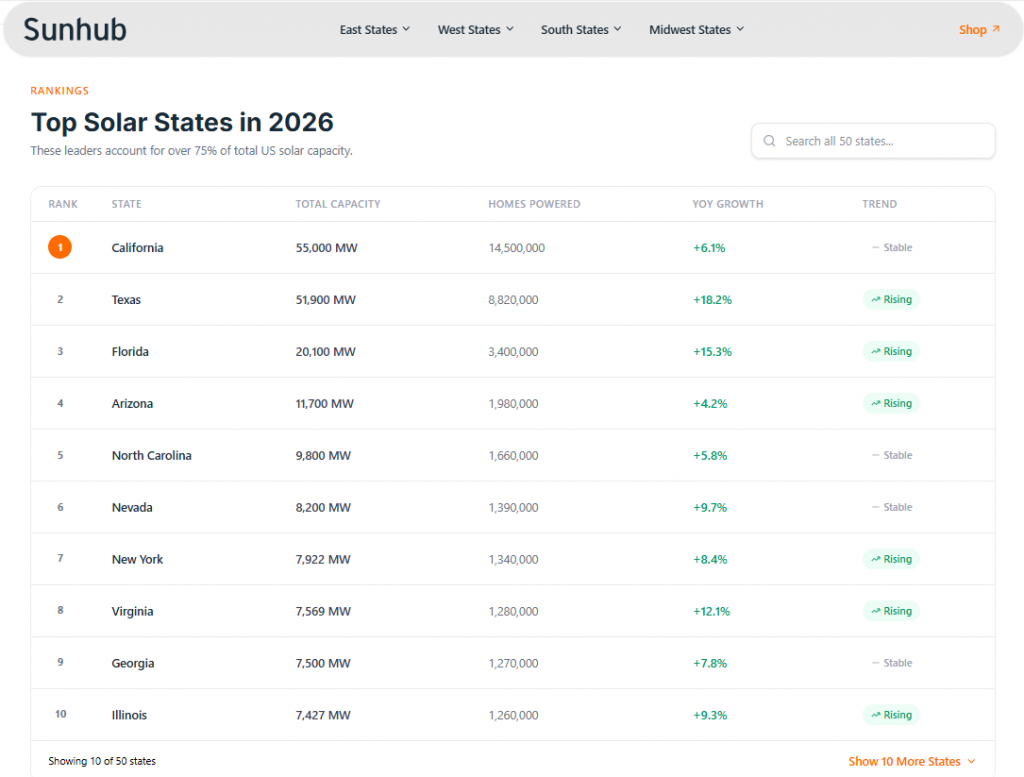
Explore U.S. Solar State Rankings
Compare solar rankings, installed capacity, growth trends, and market performance across all 50 states. Discover regional insights to support smarter procurement and expansion decisions.
Analysts also point to a combination of geopolitical and policy factors that contributed to the March surge. Rising global fossil fuel prices, linked in part to disruptions in Middle East energy markets following the ongoing Iran conflict, increased the relative attractiveness of solar power. At the same time, China’s decision to end certain export tax rebate programs in April created an incentive for buyers to accelerate purchases before higher prices took effect. Industry reporting indicates this led to front loading of orders, as developers and governments rushed to secure supply ahead of the policy change.
The March figures also highlight how concentrated global solar manufacturing remains. China continues to dominate global supply chains for solar panels and components, with its exports shaping deployment trends across emerging markets. Ember data shows that dozens of countries recorded all-time highs in solar imports during the month, reflecting a synchronized global purchasing cycle rather than isolated regional growth.
While the March record is notable, some analysts caution that part of the spike may reflect timing effects rather than sustained underlying demand growth. Research cited by industry outlets such as pv magazine suggests that a portion of the increase resulted from buyers advancing orders ahead of policy changes rather than a permanent acceleration in consumption. However, longer-term trends still point to strong global expansion of solar capacity, particularly in regions with high electricity demand growth and abundant solar resources.
Despite potential short-term fluctuations, the overall trajectory of solar trade remains upward. Africa and Asia continue to emerge as key growth markets, supported by falling technology costs and increasing investment in distributed and utility-scale solar projects. At the same time, trade shifts are being influenced by policy barriers in some Western markets, which have redirected exports toward developing economies.
The March 2026 surge underscores the growing role of solar energy as a central component of global electricity expansion. It also highlights how sensitive the sector has become to both geopolitical developments and trade policy shifts, alongside long-term structural demand for clean energy technologies.
Sources:
- Ember analysis of Chinese customs data (reported via PV Tech and Climate Home News coverage)
- Reuters reporting on China solar export surge, April 2026
- pv magazine International analysis of March 2026 export spike
- Semafor reporting on record solar import levels across 50 countries
- Mongabay reporting based on Ember data (contextual reference)


 Daniyal Ahmed
 Marley Kakusa



Add comment